

Warren and I are taking a trip and decided to revive the blog so non-Facebook users can keep up on our whereabouts, and also to do non-political postings.
So, Warren's going to be the main writer, and Anita the main photo-poster, but we'll share the roles.
Our Peace Corps service in Nicaragua ended Oct 31, 2016 and we went back to the the States for a bit after visiting folks in Guatemala immediately after our service, and then returned to Nicaragua until the end of February 2018.
Once again, we went back to the U.S. to see some friends and family and now are making our way to Europe since Warren has never been there. To keep posted on our whereabouts and adventures, subscribe to this blog!
José y yo estamos viajando otra vez y decidimos revivir el blog "Gringa on the Go" para que gente que no usa Face pueden saber nuestro paradero, y también podemos evitar lo político.
Pues, José va a ser el escritor principal y Anita el foto-póster principal pero compartiremos los roles.
Nuestro servicio de Cuerpo de Paz Nicaragua terminó el 31 de octubre 2016 y regresamos a EEUU por un rato después de visitar a amigos en Guatemala inmediatamente después de nuestro servicio.
Después de la visita a EEUU, fuimos a Nicaragua de nuevo hasta el fin de febrero 2018. Pues, hemos visitado otra vez a EEUU- California, Nevada, y Portland, Oregon.
Desde allí viajamos a Boston, Massachusetts, donde estamos ahora. Mañana vamos a viajar brevemente a Rhode Island para visitar a gente asociado con Cuerpo de Paz.
El 3 de abril, vamos a ir a España y esperamos quedarnos en Europa 4 meses en total. Jose nunca ha estado allí - mejor hacerlo ahora cuando lo podemos.
Subscribe To

 Posts
All Comments
Posts
All Comments
Thursday, March 29, 2018


Thursday, June 25, 2015
Quick Update June 25, 2015
A brief summary of our status here in Peace Corps Nicaraagua;
- We are healthy
- We are content
- We are very busy
- Warren (Jose) is doing a great job helping his teachers, including not only the primary school ones that are his official assignment, but also secondary school students in Physics and Math, as well as getting a school garden started
- Anita is going through "first year teaching primary kids" challenges (teachers, remember your first year?), has gotten her school garden coordinated again, and they have begun planting, and some stuff is already sprouting, and is down to under 140 pounds (lots of fruit, veggies, chicken without hormones, and walking)!
- Both of us are getting "mob hugs" from the kids - we are like rock stars!
- Have been posting pictures on Facebook (easier than on the blog) but will give you the following link to access those without a FB account (let me know if you are able to see them!)
- More another time.....off to Teacher Appreciation Day activiites.
Sunday, February 1, 2015
Summary of our nearly Six Months in Peace Corps Nicaragua
Warren's the writer...I do the photography, so here's a great summary of the last 6 months here, written by Warren (Jose). I will put my comments in blue italics. Anita
Nicaragua, January 31, 2015
We have been almost six months in Nicaragua and I have
left our experiences largely unwritten. January has come and gone and school
starts soon, this will be my last opportunity to share with everyone all that
has happened since arriving in August.
We arrived in Nicaragua around mid-August, normally
the middle of the rainy season but this year the country was in a severe
drought. We had a few weeks of continual
dry and very hot weather, although it seemed normal to us since we did not know
what to expect. The rainy season started
in earnest during September, which means we had torrential downpours at least a
few hours every day, usually during the afternoon. They were actually welcome for the cool they
brought.
Our training was in the department of Carazo. I lived with a family in El Rosario and Anita
lived about a half hour away in Diriamba.
One of the main reasons for PC to put married couples in separate training sites is because Spanish is a big focus, and we needed to spend most of our time speaking Spanish, not English. The altitude was just over 1,500 feet in elevation and we were fortunate
not to endure the intense heat and humidity of the “real” tropics.
Training was mentally brutal. Peace Corps has an excellent training program
in Nicaragua that continues 5 or 6 days each week for 3 months. The bulk of training, fortunately for me, was
Spanish. We had about 6 hours of Spanish
class each day, 4 days a week, in groups of 3 or 4 volunteers and 1 teacher. Following class we had 1 or 2 hours of
homework every night. At least one day
each week and sometimes 2 or 3 days, we would have group training (all 22
future volunteers) in teaching, Nicaragua history and culture, environmental
education, and general Peace Corps operations.
We also were required to teach at least 6 natural science lessons in the
local primary school which included preparing lessons and co-teaching with a
teacher. For me, this was the most
interesting and exciting part. After 3
months with no breaks, we were happy to move to our sites where we had more
individual responsibility and some breathing room.
During training I realized how bad my hearing has
become. Except for Spanish lessons, this
wasn’t a huge disability since I have experience in teaching, environmental
education, and Peace Corps. But, my
hearing will continue to be a challenge throughout our time here. People I don’t know just assume I don’t know
much Spanish, but kids and friends are usually willing to talk slower and
clearer.
Carazo, where we trained, was moderately hot and very
humid. By November, nights and mornings
were cool. We moved to Jinotega in early
November which is in the north part of Nicaragua, the only truly mountainous
part of the country. We now live at over
3,000 feet in elevation. Our first days
in Jinotega, our home for the next 2 years, were rainy and cool and rainy and
rainy. The climate seemed much like
Oregon or Washington when we first arrived.
Carazo was green in the country and appears more like rainforest where
the land isn’t cleared for farming. In Jinotega, the trees are smaller (or gone
from cutting) and covered with Spanish moss, and it is mostly green. Pines are common near the tops of the
mountains. We are surrounded by
mountains and the fog shrouds them most of the time (although less during the
dry season). While other volunteers
continue to suffer in the heat, we are living in perpetual spring (with maybe a
touch of mild winter at night). We have
incredible gusty wind almost every day which also makes it cooler and nice
sounds for sleeping. Supposedly the
winds will stop in March.
Jinotega is a fairly big city, maybe 50,000 people or
more. We have access to almost
everything you could find in the states and our daily life is not substantially
different than living in the states. Except that I walk a lot more, and we eat very little processed food, so my weight is down lower than it has been in a couple decades! Our
place is small, our bathroom is separate from our living area, and our kitchen
(a 3 burner propane stove) is outside.
But we have a flush toilet, screened windows, tile floors, electricity,
and internet. The shower is a tad
cooler, but that insures that we save water.
The central city is relatively clean with lots of restaurants and
hotels. I think it is one of the nicest
cities in Nicaragua, although it lacks the history of many other cities. The family also has a dog, Queen, an unnamed cat (I call him Kitty), and a parrot that is mostly outside. The large yard is mostly tropical flowers and vegetation, and we hear the rustling of the palms in the breeze/wind.
Outside of Jinotega, farming is king. They grow lettuce, cabbage, broccoli,
carrots, beans, corn, tomatoes (in hothouses), lots and lots of potatoes, bananas, plantain,
onions, beets, oranges, lemons, garlic, ginger, and more, …. and coffee. Coffee is king. Jinotega produces about 80% of the coffee
produced in Nicaragua and it is high quality because of the altitude. Nearly all the mountains are cloaked in
coffee under the trees that provide shade.
This time of year is when coffee is picked, so Jinotega bustles with
activity. Coffee beans litter the
streets where warehouses buy and ship coffee.
Kind of like Sacramento with tomatoes and Gridley (long ago) with
peaches. Too bad I don’t like coffee.
There are several nature reserves near Jinotega. We have only visited one (La Bastilla) and it is mostly
coffee plantation; but it is beautiful in the cloud forest and with a little
hiking you can leave the coffee behind and discover some of the historic
diversity of animals and plants that at one time dominated the north part of
the country. We saw lots of birds and
heard some howler monkeys, and we anticipate more exciting finds in the future.
I added some photos below (you know I had to include at least one spider...), but decided to add a "photo page" separately since these may take awhile for you to upload, so keep your eyes open for a separate photo post.....
AND, for those of you with Facebook, check out La Bastilla's FB page - there are photos of us around the campfire on New Years Eve, eating marshmallows! https://www.facebook.com/BastillaEcolodge

 |
The trail and coffee plants above.... |
 |
Coffee beans ready to pick |
 |
Some Spanish moss |

 |
An orchid |
 |
Warren (Jose) by a small rivulet crossing the trail |
The countryside between Jinotega and Managua has really
changed over the last few months. Where
there are not farms, much of the country is covered with shrubby dry-tropical forest. When we first arrived, the forest was green,
but now most of the trees are leafless and the shrubs and grass are dry and
brown. You can easily see the prickly
pear and other cactus among the barren trees.
More incredible still are the flowers.
All the barren trees are blooming: bright yellow, white, pink, red,
intense orange, and more. It is like
someone decorated all the prune and walnut trees with bright colored Christmas
balls for the winter (although they call this time of year summer because it
doesn’t rain). They have 2 seasons here, summer (the dry season, which is in the colder months we call winter) and winter (wet).
Although school is out, we have not lacked for things
to do, during our first 3 months. We have
been getting to know Jinotega and meeting people that work for the government
and various organizations. We have made
lots of contacts for future projects.
Anita has a giant garden at her school that we have cared for and
enjoyed the harvest of radishes, lettuce, and cucumbers. The garden had already been planted by the time we arrived in November, by a fourth grade teacher and her students. They had done an amazing job, but most of the plants were planted WAY too close together, so they had gotten a bit stressed. She & I thinned it out and transplanted some lettuce and other plants. I, and the rest of my Environmental Ed PC cohorts (and staff) were very impressed by what she had accomplished. Keeping it watered was a huge challenge, especially during the vacation months Nov-Jan. We planted kale seeds at the start of
December and, to our joy, kale loves the climate of Jinotega. We have been eating kale for several weeks
and probably will continue to have kale for another month (we need to plant
more). However, kale may catch on here
as a desired food, lots of people are curious because it does so well and is
very impressive in size and color.
During November we attended classes each day at our
respective schools and observed students and teachers, trying to get some idea
of what we would be doing once we start co-teaching in a week or two. Overall, student behavior is great and
classes are mostly lecture for 1st grade through 10th
grade. Many students leave school after 6th
grade (and sometimes before). There are
lots of opportunities for improving the lessons, although I’m sure we will find
some challenges insurmountable for lack of resources and cultural reasons. Peace Corps' goal (and ours) is to leave behind something sustainable, so we are trying to use local resources that are affordable to the locals. They are very creative in coming up with ways to make things that we in the States would be able to just run out and buy. They certainly are already very good at reusing and repairing here.
We also enjoyed all the Christmas activities in our
community and with our family. We are so
fortunate to have a very loving family that has made us feel a part of their
lives. We live on the other side of a
small courtyard from a sister and brother (in their fifties) that care for
their aging mother (89 years old). We
fix most of our own meals but share a meal or two each week with the family,
including celebrations for holidays and birthdays.
During January, we have been reviewing the curriculum
for classes in our schools and preparing lesson plans. In addition, I have been taking a Spanish
class every day for one hour (every little bit helps). Toward the middle of January both of Anita
and I taught math for students that failed the previous year. We thought we were volunteering for tutoring,
but turns out we were the teachers – lesson plans, teaching lessons, tests, and
all. The experience was more than we
really wanted to take on and we really aren’t supposed to be involved in
grading, but reality has a way of being different than supposed to…. I decided not to be involved in grading since I didn't have as much experience and since the sub-director was gong to be "substituting" the last of the 3 weeks, but gave her attendance records, and also did some ungraded exams to see their weaknesses and progress. We were both teaching 3 grades at once - 3rd, 4th, and 5th for me and 7th, 8th, and 9th for Warren. Luckily for me, I had "only" 10 students, but Warren attracted more students every day and ended up with 23 official students, along with about 7-10 kids who stood at the "windows" every day observing.
Although Nicaragua has the lowest per capita income of
all of Central and South America, most the people are healthy and welcoming. Food is generally available and most areas
have potable water. The rivers are
relatively clean (compared to those in Guatemala). The people may not
have much stuff, but the main ingredients for getting along well are here. Every town has a health center and health
care is fee. Over fifty percent of their
energy needs are met by renewable sources (solar, wind, geothermal, and
wood). I may substantially change my
views in the above paragraph as we come to know the country better, but
Nicaragua seems like a nice country to live in. It is also one of the safest countries in Central America, up there with Costa Rica. It has an incredible variety of natural beauty and the people are wonderful.
As we start our work in the schools next week we will
have many more experiences to share over the coming months. I’ll try to keep you posted more regularly,
but time certainly has a way of flying by.
If the urge strikes you, you are always welcome to visit us in the mountains
among the clouds in Jinotega.
Los saludamos atentamente,
Warren (José) and Anita
Wednesday, December 3, 2014
Dec 2 2014 - Almost four months in Nicaragua!
Our family in Jinotega celebrated Thanksgiving dinner with Anita and me. We provided 2 roasted chickens and the family fixed them up with vegetables and rice. They were beautiful and tasty and they all made us feel like family. We are getting to know our community and haven't really decided on how we will work in our schools. We will cross that bridge in February after we know have more experience and know folks better.
OUR JINOTEGA, NICARAGUA HOST FAMILY
 |
Sister |
 |
Rosa |
 |
Mother and brother |
 |
Queen, aka Necia |
 |
| Jose (Warren) "carving" the Pollo |
 |
| Brother, Jose y Ana |
 |
Dessert! |

I was dubious about having to attend additional training this week (Dec. 1-3), but we have learned much more than I had expected and the location is beautiful. We are up in the mountains south of Managua at an ecolodge - learning about building fuel-efficient stoves to help reduce deforestation by decreasing the amount of wood needed for cooking, We are also exchanging ideas and information among the others in our group (Nica Environment 64) and the group that arrived a year before us (N62). Lots of great ideas for teaching that will come in handy very soon. Technical sessions are Monday and Tuesday and then Wednesday we will use what we've learned to build a couple of fuel-efficient wood-burning ovens in a place near where we trained during August - November.
In addition, I found hornworts - a moss like plant that I have never found on my own (until now) and I haven't seen one for over 40 years. Pretty exciting stuff (for a biologist, others just kind of stare at me). I also found a kind of liverwort that I had only seen in pictures. Very cool place with flowers, ponds, waterfalls, and the calls of howler monkeys sending shivers down Anita's spine.

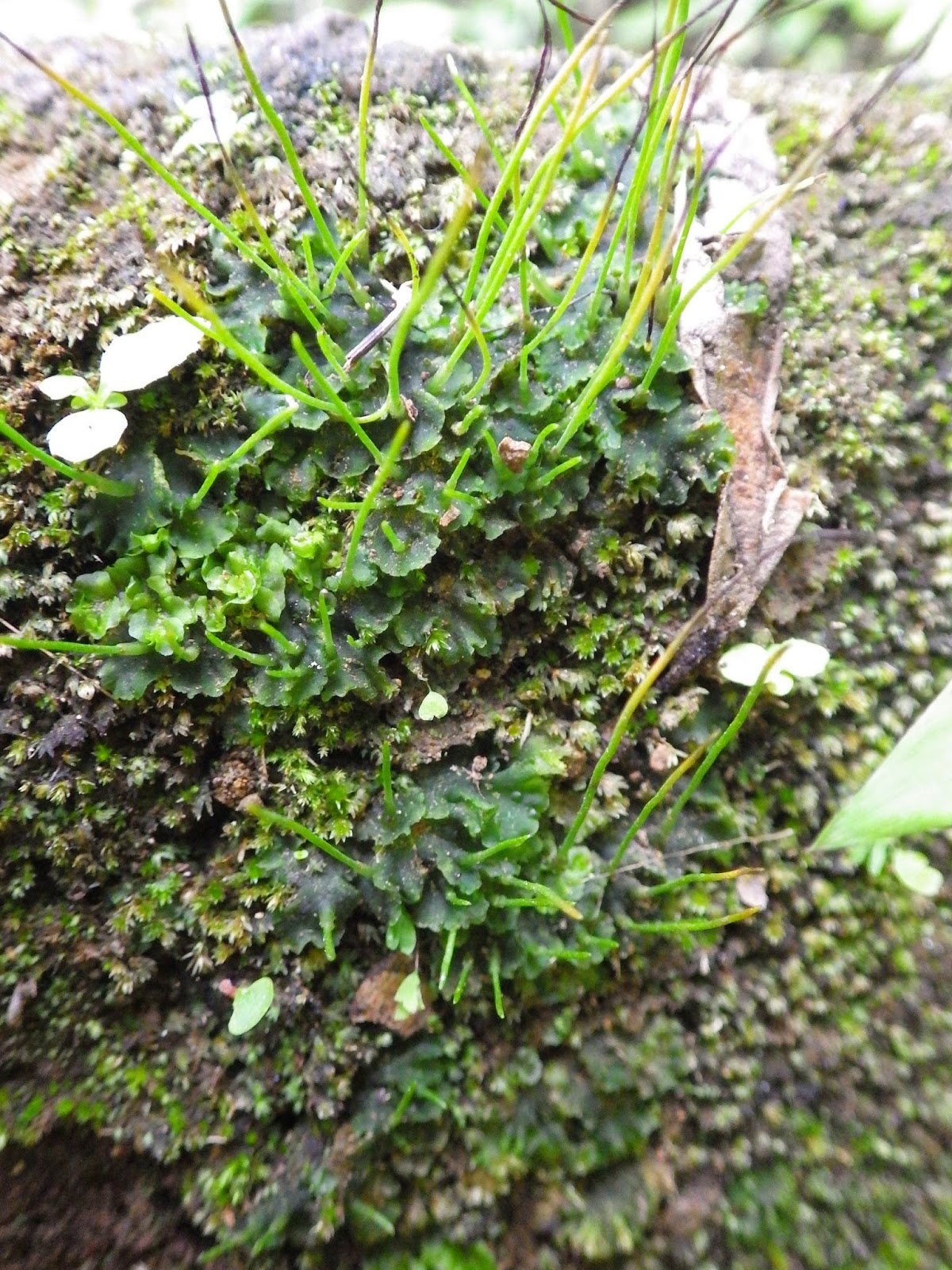


 |
Carmen |
 |
Jose Anita and Fatima |
More in a future post on our oven-building experiences......
Wednesday, October 15, 2014
Department of Jinotega, Nicaragua!
We got our site assignment today! We will be in the Department (like a state) of Jinotega, in the north of Nicaragua. A big part of our jobs will be co-planning & co-teaching Environmental Education in an elementary school. We won't decide on which grades until later, but the options are 3rd through 6th grade.
I still have reports to finish, so this again is brief. We head to our sites for a visit next week, so there will be photos later.
The climate is cooler there, but not cold, from what I've heard. We will have a separate space and will probably be able to cook and also have a little garden (likely a good place for growing kale, with its cooler weather.
Anyway, bye for now.
Here's a link to some brief information:
http://www.nicaragua.com/jinotega-region/

We'll be in the southern part of Jinotega.
Hasta luego!
Anita
Monday, October 13, 2014
EXCITING WEEK!
In a couple of days we will find out our site assignment - where in Nicaragua we will be for the next 2 years starting in November!
Warren and I will be living together on site - we'll have to work to be sure we keep up our Spanish - but will have different schools and teachers that we'll be working with.
Training is the most intense time - 3 months to teach us a ton of stuff about Nicaragua, co-planning and co-teaching, making an organic school garden with our students (and learning what pests we will be battling), integrating into the community, LOTS of Spanish classes of 3-4 students (usually 3 days or more/week, 6 hrs/day), homework, "charlas" (talks), and "practicums" - mostly related to our organic gardens, tree nurseries, and organic composting. I've got 4th grade kids that I'm co-teaching, and Warren has 6th grade (Natural Sciences).
Anyway, I have reports and a CV (in Spanish) to do, so going to sign off, but will let you know later where we are going.
Next week we will do a site visit and actually SEE where we'll be - you KNOW I'll take pictures - posting them, of course, is another thing......but things should be less hectic once we're on site - or so we've been told.
I'm going to stop here, because this already froze up on me once...twice, and I want to get something on here to let you know we are still here and fine.
Tuesday, September 16, 2014
Alive and Well in Nicaragua!
Warren (Jose) and I are very busy here, and also healthy and doing fine. There is SO much to learn before we get assigned to our official sites in about 2 months.
Warren (Jose) and I are currently (during the 3-month training) living in separate sites, which really helps our Spanish proficiency. We visit each other's site every other weekend - I guess you could call them conjugal visits ;-) We have completed one of the 3 months now. We have Spanish classes for about 6 hours per day around 2 - 3 days per week, and then also attend "Charlas" (talks) and trainings on various subjects for the other days, including many on Saturdays. We have homework and also various projects to complete, including creating and practicing a community survey on an environmental issue, co-planning and co-teaching Natural Science classes with a Nicaraguan teacher (4th grade for me and 6th grade for Jose), and creating a school vegetable garden (un huerto) at our school. We have planted ayote (a squash), chiltoma (red and green peppers), rabano (radishes), and pepinos (cucumbers), all of which have come up now.
SEPTEMBER 6, 2014, SETTING UP OUR VEGETABLE GARDEN (HUERTO)
 | ||||||||
Tara, an experienced volunteer, helping with our huerto
SEPT. 16, TEN DAYS LATER, some of our results |


 |
Our Ayote |
 |
Our seedbed of sweet peppers |
 |
One of our cucumbers |
 |
One of our "rabanos" - radishes |
One of our garden challenges will be zompopos (leaf-cutter ants) - they are amazing critters, but not something you want in your garden. They can wipe it out in no time! Right now they seem to be VERY busy cutting up and moving leaves from a cut limb...to their nest, which is WAY too close for comfort to our garden. We will try making and applying natural pesticides, but I'm thinking maybe keeping them busy with trimmed limbs is a good stop-gap measure! Anyone else out there have experience with organic gardening near a nest of zompopos?
 |
Entrance to "Zompopo" nest near our garden - just a few of the leaf-cutter ants bringing leaf pieces to the nest |
This last weekend I went with a few Peace Corps trainees to a reserve (La Makina) not far from where I'm living.


Not much time for more writing now (I have a Spanish Proficiency test tomorrow), so I'll post a few pictures here. Also, this Sunday we leave our training sites to visit another volunteer somewhere in Nicaragua (we won't know until Friday where).
Hasta luego (until later).
Anita (Ana)
Subscribe to:
Posts (Atom)